


Who We Are
Human Matters Lab is an independent, transdisciplinary research collective exploring what it means to be human in the age of artificial intelligence (AI).
Grounded in ethical, human-centric approaches to AI and robotics, the Lab conducts interdisciplinary inquiry across philosophy, technology, art, literature, and education. It explores how AI reconfigures human cognition and reality and considers the political, societal and educational implications of this transformation.
Vision
Our vision is to help ensure that AI serves human flourishing, deepens our search for meaning, and safeguards the values that make us human.
Because in the age of AI, meaning still matters.
Research & Collaboration
→ Interdisciplinary research collaboration across AI, philosophy, education, ethics, policy, science, engineering, arts and literature.
→ Collaboration in national and international research networks and policy-oriented projects including Erasmus+ and other EU-funded initiatives.
→ Co-organization of national and international conferences, workshops, lectures, exhibitions and academic events.
Academia
Education
→ Ethical and human-centric AI literacy curriculum design through philosophical inquiry.
→ Interdisciplinary teacher training and workshops in philosophy and AI.
→ Research-based contributions to human-centric and responsible AI governance for human rights, well-being and democratic values.
→ Collaboration with partners on events, awareness programs, and dissemination activities.
AI Policy, Research and Civil Society
The Collective


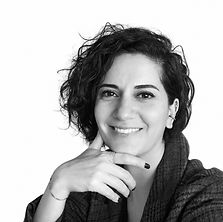
Celale Esra Algan PhD(c)
Research Collective Lead
Celale Esra Algan, PhD(c), holds a BA and an MA in Computer and Instructional Technology Education and is currently pursuing her doctoral studies in Philosophy. Centering her research on the philosophy of artificial intelligence (AI), she focuses on mind and reality, exploring the extended mind and expanding reality in the age of AI. Her studies ask what it means to be human as AI reshapes how we think, know, and exist.
With more than 20 years of experience in K-12 education, she has served as a teacher and educational administrator at private institutions across Türkiye. Bringing together classroom practice and academic inquiry, she led the development of Türkiye's first AI literacy curriculum. Approaching AI through a human-centered perspective grounded in human rights, ethical values, and human well-being, her interdisciplinary work brings together AI literacy, AI policy, governance, and philosophy.
She completed the Artificial Intelligence Policy program at the Center for AI and Digital Policy in Spring 2026 with distinction, with a focus on research, writing, and policy analysis.
Senior Researcher
Asst. Prof. Dr. Ayşegül Liman Kaban
Ayşegül Liman Kaban, PhD, is an Assistant Professor in ICT and Digital Education at Mary Immaculate College, Ireland, where she works at the intersection of emerging technologies, teacher education, and the future of learning. Her research explores how artificial intelligence, mixed and virtual reality, game-based learning, and digital technologies can move beyond novelty to become meaningful, human-centred tools for teaching and learning.
Her work is particularly concerned with the design and integration of emerging technologies in teacher education, primary education, and integrated STEM, with a focus on teachers’ digital competence, AI literacy, learner experience, creativity, and innovative pedagogical practice. Rather than treating technology as an end in itself, she examines the conditions under which it can genuinely enrich learning, empower teachers, and support more inclusive and engaging educational experiences.
Her research and professional activities extend across national and international initiatives. She has contributed to UNESCO’s work on generative AI and AI competency frameworks for teachers and students, participates in European digital education initiatives, and is actively involved in Erasmus+ projects developing innovative approaches to mixed reality and AI-supported education. She is also Co-Director of SPARK (STEM in Primary Education: Advancing Research and Knowledge) at Mary Immaculate College and serves as an Associate Editor of the Journal of Computer Assisted Learning.
Dr. Sedef Karakaş
Researcher
Sedef Karakaş, PhD, holds a BA and an MA in Philosophy from Galatasaray University, and completed her doctoral studies on a full scholarship at Maltepe University. Centering her research on the philosophy of consciousness, she focuses on subjectivity and embodied cognition, as well as a life-centered understanding of nature and dynamic systems theory. Approaching the technological realm not in opposition to nature but through a holistic understanding, she contemplates human existence, meaning, and value in the digital age within this comprehensive framework.
Viewing interdisciplinary fluidity as a fundamental component of intellectual production, she aims to build bridges across philosophy, science, and art. In this context, she specifically explores the integration possibilities between contemporary scientific perspectives and transcendental phenomenology.
Researcher
Dr. Tuğba Gürkan Şenyavaş
Tuğba Gürkan Şenyavaş, PhD, is an academic and researcher in the Art Education Program within the Department of Fine Arts Education at Bursa Uludağ University, Türkiye. She received her BA and PhD in Visual Arts Education from Anadolu University and her MA in the same field from Bursa Uludağ University. Her master's research explored museums as out-of-school learning environments for art teaching, while her doctoral research examined creative drama as a pedagogical method, with particular emphasis on its role in teaching art and preparing visual arts educators.
Her academic work centers on museum education, drama in art education, and visual arts education. She teaches courses in museum education, drama in art education, and graphic design, combining academic study with experiential learning. Within her courses, she develops participatory museum projects with her students and collaborates with the Bursa Museums Branch Directorate. Her work in museum education also includes research projects, educational publications, workshops, and presentations at national and international academic events.
Alongside her academic work, Şenyavaş maintains an active artistic practice, and her work has been featured in numerous national and international group and juried exhibitions and art events. She continues her academic, research, educational, and artistic activities at Bursa Uludağ University.
Publications &
Presentations
Peer Reviewed Publications
Karakaş, S., & Kutlusoy, Z. (2026). Doğa ile Deneyim Arasında Niteler ve Fenomenal Bilinç Sorunu. MetaZihin: Yapay Zeka ve Zihin Felsefesi Dergisi, 8(2), 123-152. https://doi.org/10.51404/metazihin.1744565
Algan, C. E. (2026, May 14–15). The ontological status of reality today and artificial intelligence as an agent. II. International Graduate Students Interdisciplinary Symposium, Maltepe University, Istanbul, Türkiye.
Algan, C. E. (2023). David Chalmers'ın genişletilmiş zihin teorisinin yapay zekâ ve artırılmış gerçeklik bağlamında değerlendirilmesi [Evaluation of David Chalmers' extended theory of mind in the context of artificial intelligence and augmented reality]. In IETC'23 BAU abstract book (p. 26). https://iet-c.net/publications.php
Algan, C. E. (2023). David Chalmers'ın sanal gerçekçilik görüşüne göre gerçeğin bilinebilirliği [The knowability of reality according to David Chalmers' view of virtual realism]. In IETC'23 BAU abstract book (p. 27). https://iet-c.net/publications.php
Conference Papers
Algan, C. E. (2025). Oyunlastırma ile yapay zekâ etigi egitimi [Teaching artificial intelligence ethics through gamification]. In H. Nuhoğlu, S. Aşiroğlu, S. Öztürk, E. Gürültü, & H. Bağçe Özbaş (Eds.), I. Ulusal yapay zekâ çağında öğretmen esenliği sempozyumu: Tam metin bildiriler [I. National symposium on teacher well-being in the age of artificial intelligence: Full text proceedings] (pp. 94–109). Maltepe Üniversitesi. https://hdl.handle.net/20.500.12415/13859
Con
Presentations
Algan, C.E. (2026). Artificial Intelligence Ethical Literacy: Instructional Design with Philosophical Approaches, ETZ 26 – Educational Technology Summit, Istanbul, Turkiye.
Algan, C.E. (2023). Reality Perception According to David Chalmers’ View of Virtual Reality, GESS Türkiye 2023, Istanbul, Turkiye.
Projects
The MIXAP Research Project
MIXAP is an European ERASMUS+ research project that empowers teachers to create and use Mixed Reality (MR) in their classrooms. More than just a tool, MIXAP is a collaborative initiative combining pedagogy, technology, and teacher expertise.
Museum 1.0
A Micro-Museum and Memory Space for the Department of Art Education
Museum 1.0 is a student-led micro-museum that explores the history of the Department of Art Education. Developed within the Museum Education course, the project invites students to research, curate, and present the department's past, turning a shared space into a site of collective memory. Şenyavaş supervises and advises the project, guiding students through the process of building a museum from the ground up.
Augmented Reality and Generative AI-Supported Well-Being Workshops in Pediatric Oncology
In collaboration with Istanbul University-Cerrahpaşa Child Academy and Application Center / Children’s University, we are conducting well-being workshops for children receiving treatment at the Pediatric Oncology Department of Çapa Faculty of Medicine, focusing on augmented reality and generative artificial intelligence.
Through these workshops, we aim to support children’s participation in play, exploration, creativity, and self-expression through technology, while fostering their emotional well-being, curiosity, and creative self-confidence within the hospital experience.
TÜBİTAK Secondary and High School Students’ Research Projects
2026 – TÜBİTAK İstanbul Asia Regional Science Fair (Values and Ethics Education Category)
Supervised a middle school student team project on “The Energy Footprint of AI: A Green Intelligence Manifesto for Environmental Responsibility and Global Justice”.
2025 – TÜBİTAK İstanbul Asia Regional Science Fair (Values and Ethics Education Category)
Supervised a middle school student team project on “Gamified Escape Rooms for Teaching AI Ethics”, awarded Regional Second Prize.
2024 – TÜBİTAK İstanbul Asia Regional Science Fair (History Category)
Supervised a middle school student team project on “Digital horizons, cultural borders: the sustainability of our cultural heritage in the Metaverse” awarded Regional Second Prize.
